
William Latham & Stephen Todd & Dylan Banarse
Evolution and Foundation AI. Mutator, Gemini Research and Art Software
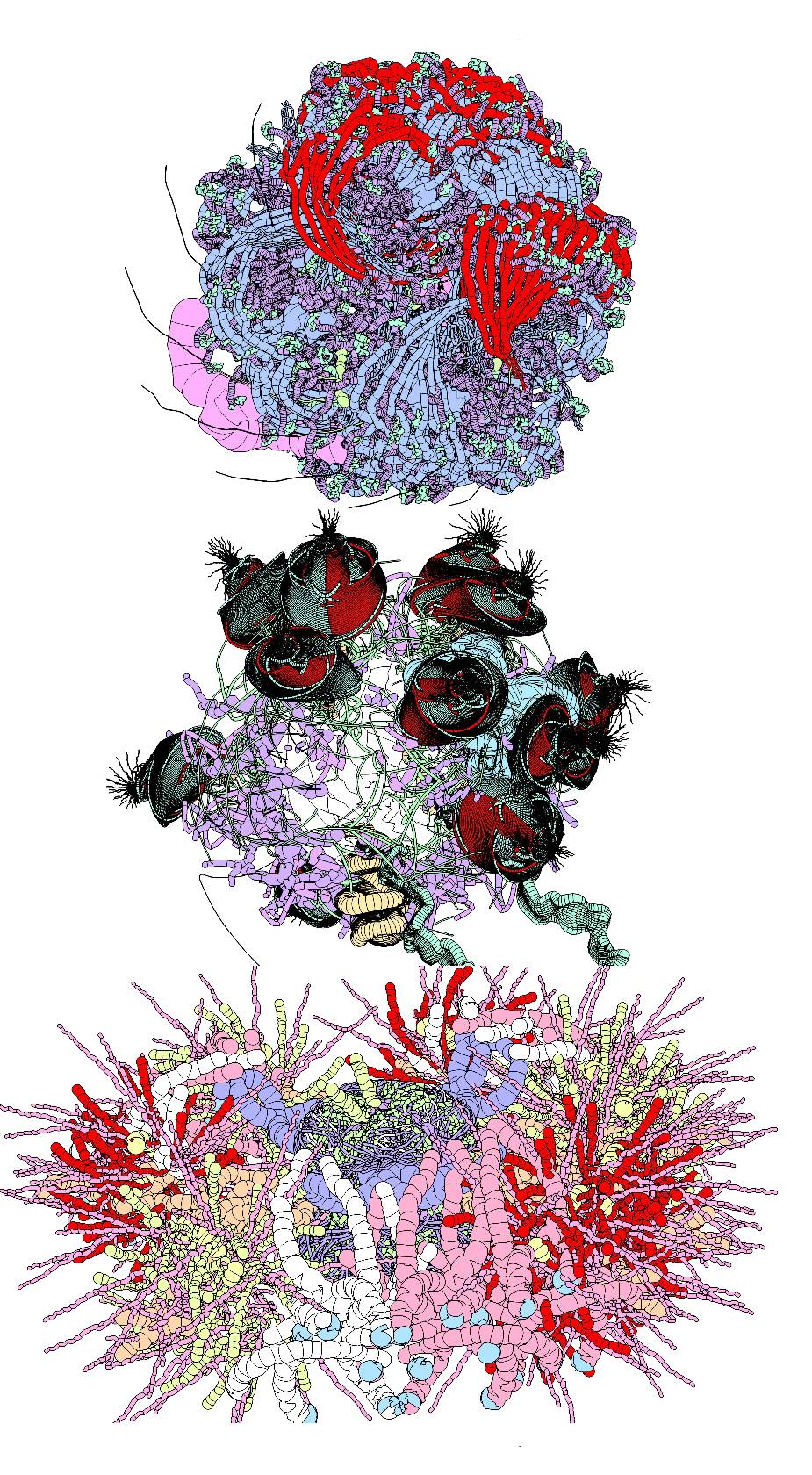
Evolution and Foundation AI. Mutator and Gemini Research / Art software
Prompt: Fly Head showing the path of a targeted evolution over 200 generations with 16 mutations per generation from the starting point of a stack of cylinders using the FormGrow grammar.
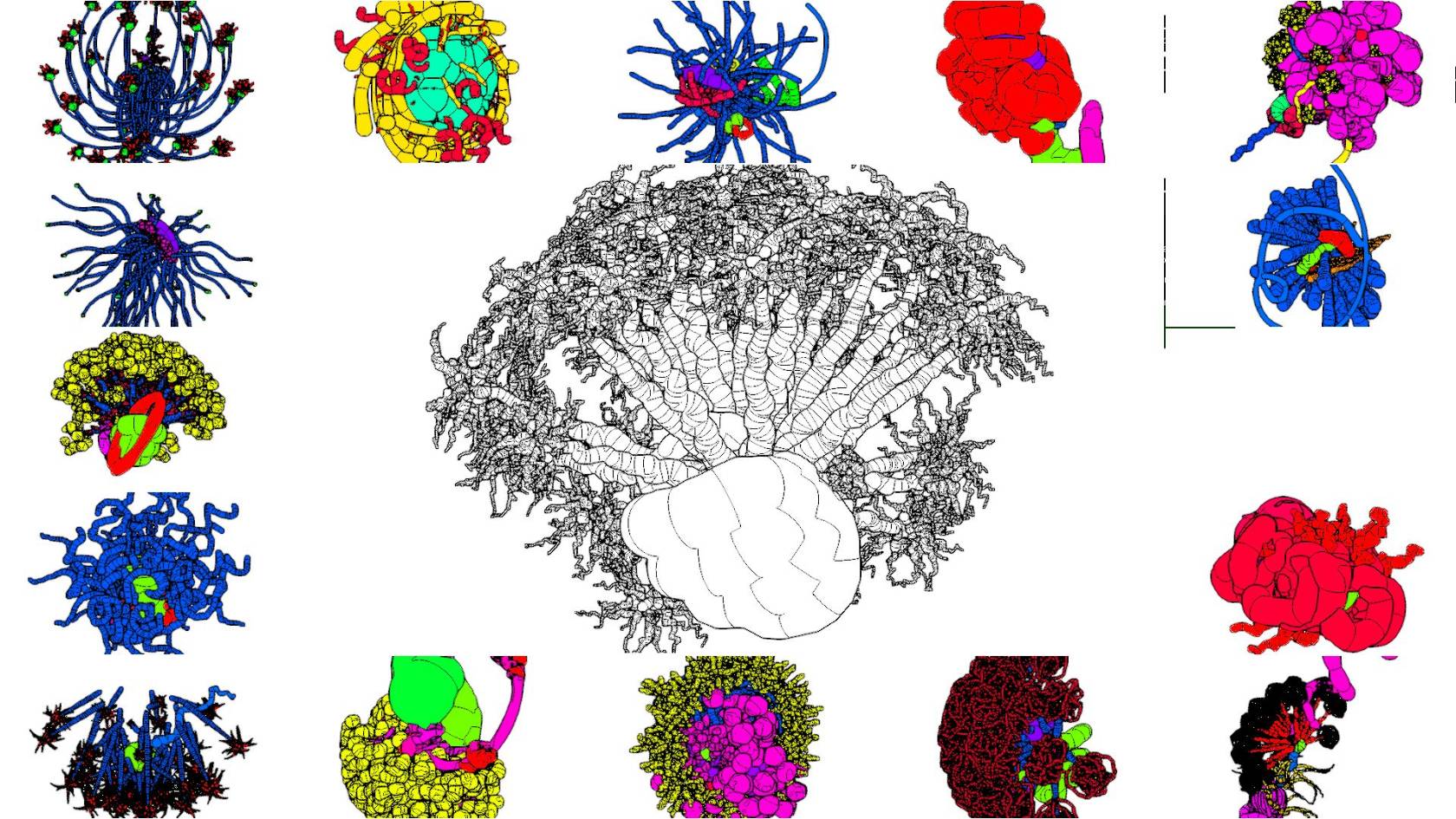
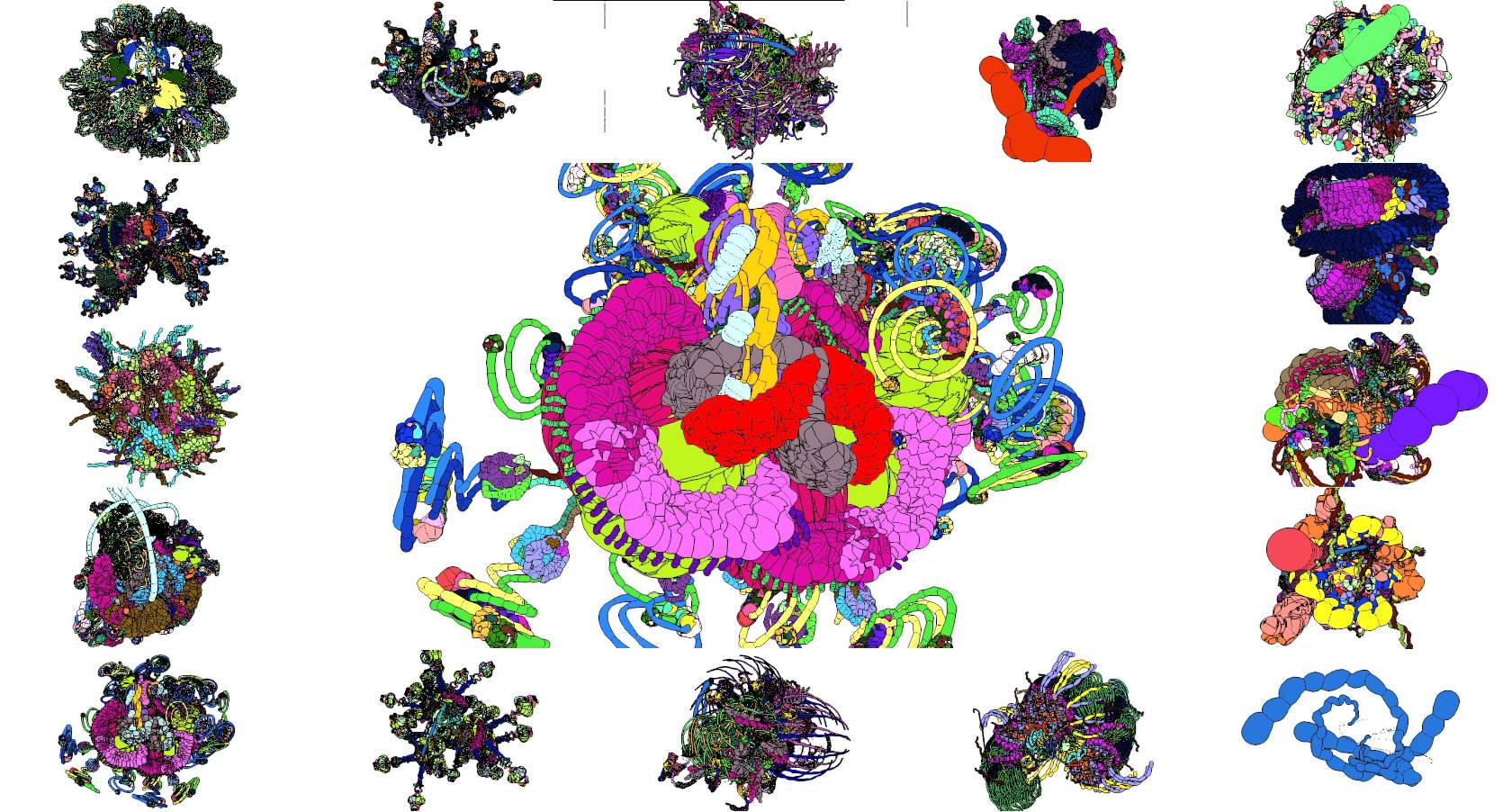
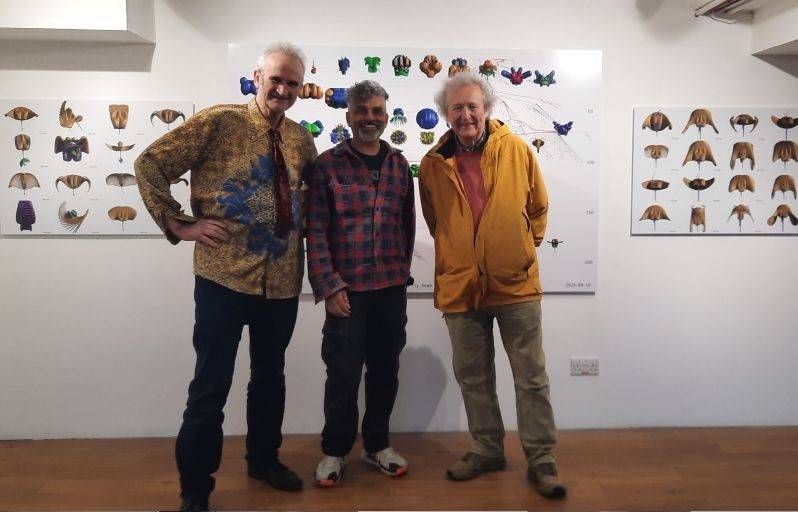
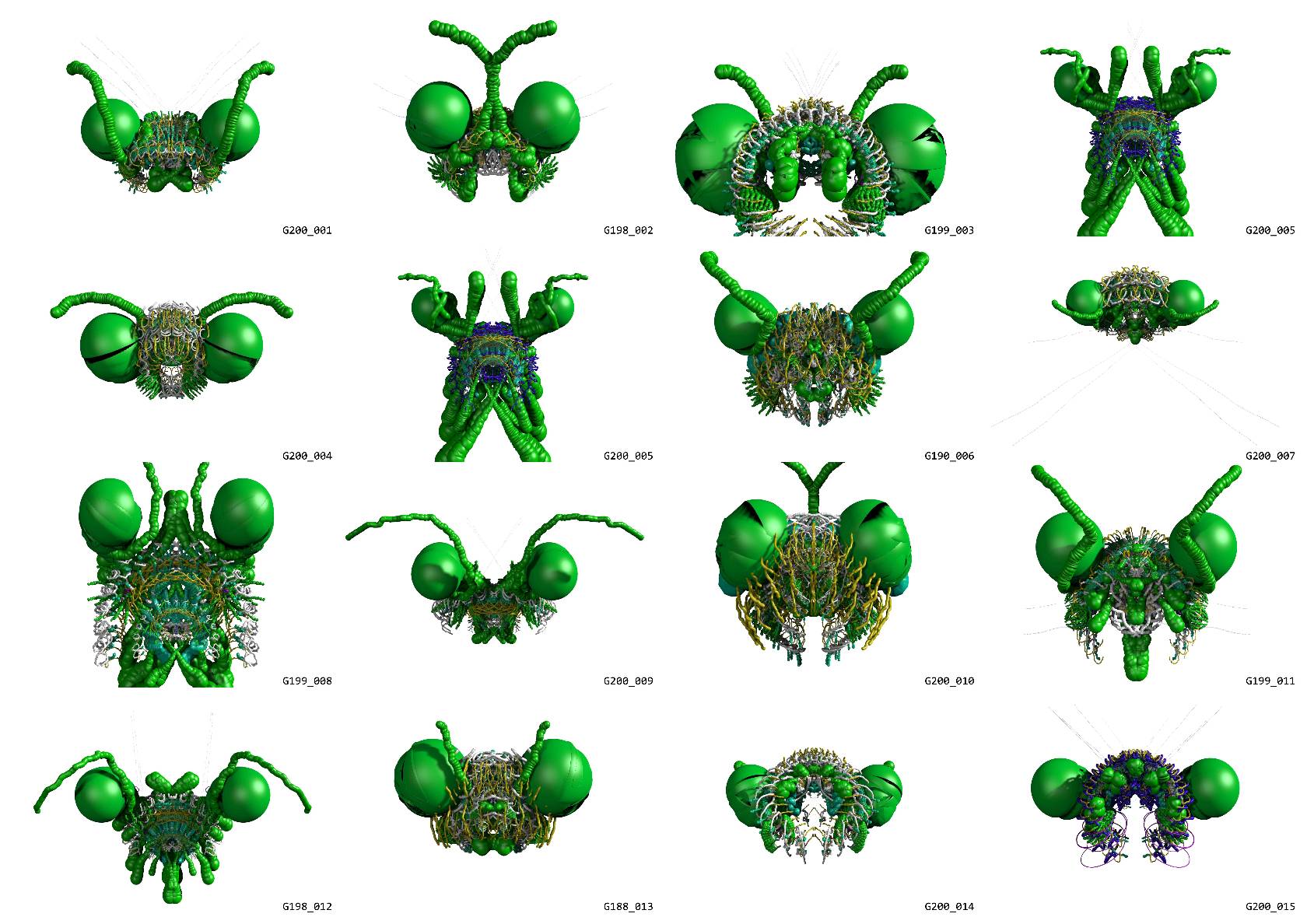
Half Way to Butterflies. Portrait Latham, Banarse, Todd. Prompt: Fly Head. 200 generations in
Weaving together the themes of Generative Art, Evolution and AI, this work shows the recent work from a collaboration between pioneering artist William Latham, his long-term collaborator, mathematician Stephen Todd, and Google DeepMind Research Engineer Dylan Banarse. It is curated by Professor Frederic Fol Leymarie from Goldsmiths
This collaboration has led to a new type of AI-guided evolution, for which Banarse has coined the term "Foundational Evolution". At its heart is Gemini, a foundation model trained on vast amounts of text and images. This allows Gemini to interpret abstract visuals in a human-like way, performing the equivalent of Rorschach’s "Ink Blot Test" by finding meaning in complex forms.
In this work, the genetic mechanisms and unique 3D "form-growing" grammar developed by Latham and Todd over the past thirty-five years are married with Gemini. Emulating evolutionary principles, the system starts from a simple geometric form. The grammar and its parameters are then mutated by their custom software, Mutator, to generate multiple variants.
These many variants are then handed over to Gemini to be judged - a process traditionally done manually by the artist. Based on its understanding of the forms and driven by Google DeepMind's "evolutionary prompts," Gemini identifies “winners” and weeds out “losers” in a Darwinian-style selection, pitting organic forms against each other in what Banarse calls "binary tournaments". It uses a "success-scoring system" and explains each of its selection decisions to retain or discard images. The result is a system that generates complex natural forms that resemble viruses, antlers, diatoms, horseshoe crabs, dragonflies and much more.
William Latham Biography
William LathamWilliam Latham is well known for his pioneering Organic Art created in the late eighties and early nineties whilst a Research Fellow at IBM UK Scientific Centre in Winchester. It was at this time he started collaborating with the IBM mathematician Stephen Todd, a collaboration which has continued to this day. His major computer art exhibitions “The Conquest of Form” and “The Empire of Form” toured the UK (starting at the Arnolfini in Bristol), Japan, Germany and Australia from 1989 for 3 years.
In 1993 on leaving IBM he moved into Rave Music Visuals working with The Shamen and other bands and worked in computer games development for consoles and PC. A field he was active in for ten years as a Creative Director. Developing original games published by Vivendi Universal, Konami, Microsoft and Warner Bros, hit games he produced at that time included The hit game Thing for PC, Playstation and Xbox (based on The John Carpenter movie).In 2007 he became a Professor of Computer Art at Goldsmiths (University of London) where he started in long standing collaboration with Prof Frederic Fol Leymarie. William and Frederic are Directors of London Geometry Ltd which they founded in 2011.
In 2024 William and mathematician Stephen Todd started a major collaboration with Dylan Banarse at Google DeepMind to integrate their Mutator / FormGrow technology with Google DeepMind’s Foundational AI Model to generate evolutionary art. William was a student The Ruskin School of Drawing (Oxford University) and The Royal College of Art (Henry Moore Scholar). William’s Art is in the permanent collections of the Pompidou Centre Paris, the Victoria and Albert Museum, the Calouste Gulbenkian Foundation and the Henry Moore Institute.
Stephen Todd Biography
Stephen’s background was mainly at IBM, working at the UK Scientific Centre in Peterlee (relational database research) (1971-1979), San Jose research (1979-1981) and Winchester (1981-1993). Stephen’s work at IBM UKSC in Winchester began with molecular graphics and other applications of scientific visualization. This led to collaboration with William Latham on Computer Art and creation of the form synthesis program (FormGrow) and associated subjective user interface (Mutator); a collaboration that ran through the late 80s and early 90s. From 1993 Stephen worked at IBM Hursley on MQSeries (1993-2007) where he was responsible for the concepts and initial design of MQSeries Message Broker (now IBM App Connect Enterprise). He authored over 80 patents whilst at IBM. In 2009 Stephen became a Visiting Professor, at Goldsmiths and restarted his long term collaboration with William Latham on the Mutator Project which had lain dormant for over 12 years, which they would then take into VR a few years later. Stephen also worked with Prof Frederic Fol Leymarie taking the Mutator VR technology and approach into a range of scientific visualisation domains including DNA and RNA visualisation.
Dylan Banarse Biography.
Dylan Banarse is a Senior Research Engineer at Google DeepMind, working at the intersection of AI, artificial-life and computational creativity. At DeepMind, his work on evolution has ranged from co-authoring the foundational PathNet paper to evolving the morphologies of 3D creatures as they learned to sumo wrestle. In the creative domain, he has developed novel generative art techniques and AI-powered collage tools like CLIP-CLOP. More recently, his research has explored the nature of understanding and consciousness in AI.
His career in the field began after a PhD on biologically-inspired neural networks (before deep learning when the bar was lower), leading him into industry where he led development on multiple BAFTA-nominated projects including the pioneering artificial-life simulation Creatures and four series of the BBC’s mixed-reality show BAMZOOKi, before exploring the early days of augmented reality for mobile and web with partners like Nokia, Cartamundi, and the BBC. To escape the digital domain he dabbles in analogue electronic generative music and video synthesis.