Ken Rinaldo
Synthetic Evolution 2023-2024
Synthetic Evolution
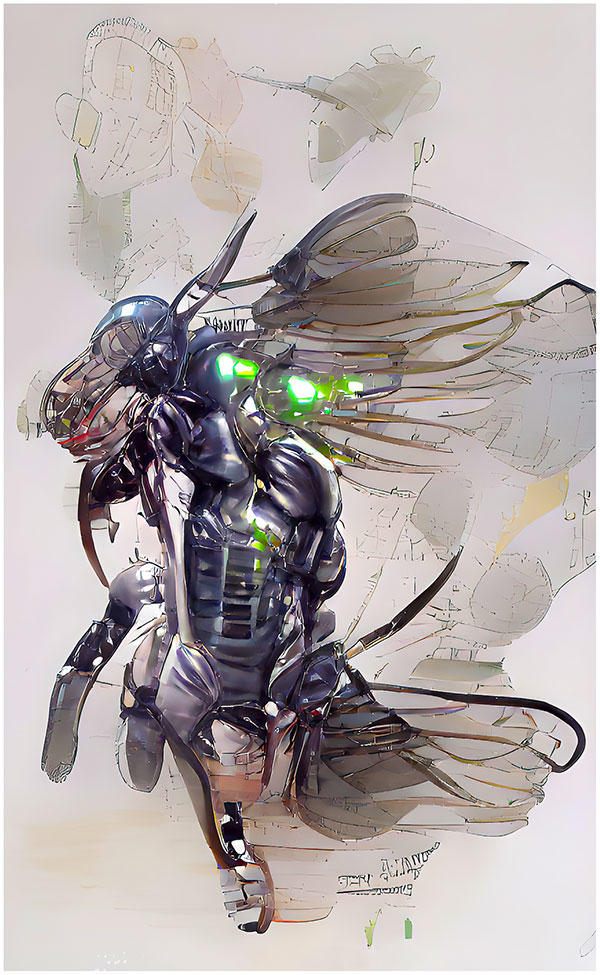
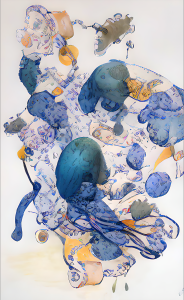
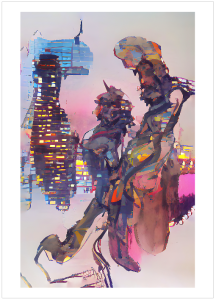
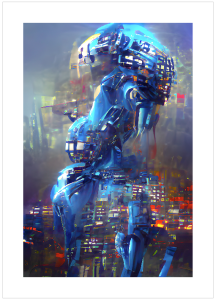
The Synthetic Evolution series uses artificial intelligence algorithms to create and evolve hand-drawn abstract artworks into experimental abstract AI works and moving image pieces. I used numerous artificial intelligence engines and started by defining a set of rules and parameters using my hand-drawn works as training data sets. I conflated these hand-drawn works with large language models, allowing AI algorithms to generate new abstract variations from the original drawings.
Because the drawings are abstract and suggestive, they suggest phrases I feed into the AI Engine, which in turn influences the AI abstract works to be influenced by those phrases.
[caption id="attachment_1130" align="aligncenter" width="586"] Washing Machines Bring Waste Streams Giclee print by Ken Rinaldo 2024[/caption]My creative process is a continuous cycle of exploration and refinement. The algorithms generate a multitude of initial variations based on specific rules. From this pool, I handpick the most intriguing or aesthetically pleasing examples to evolve further. This iterative process is repeated numerous times until I find a work that strikes the perfect balance between the original hand-drawn piece, the AI generative work, and the words sourced from WWW databases. I then enhance the digital works with color and manipulate form, culminating in the final piece.
Once the digital works are complete, I bring them into a video program. Here, I showcase the original hand-drawn works, seamlessly transitioning into the AI generative work variations. To enhance the viewing experience, I incorporate AI generative sound, adding another layer of depth to the evolving AI art.
In the Synthetic evolution series, I am exploring its potential to create new forms of expression that challenge traditional notions of creativity and authorship.
Artificial intelligence, when combined with our unique vision and intuition, has the potential to catalyze a new era of art. This synthetic evolution can lead to the creation of art forms that blur the boundaries between human and machine-generated creativity, enhancing our artistic capabilities rather than replacing them.
Artificial intelligence tools with machine learning are transforming the arts and sciences. I am most excited by AlphaFold’s ability to accurately predict 3D models of protein structures, for example, which also has the potential to transform the field of biology and new forms of synthetic life. While DNA is a slow and effective means of evolving all species, AI technology has become an accelerant, impacting how all species, including ours, will further develop.
So, how do artists support the coming AI, neural network, and big-data art boom? We learn the tools and technology and engage in the process of remixing. Suppose the artist does not care about the tools we have, then we create new AI algorithms, processes, and techniques.
As artists, we have a significant role in the development of AI art aesthetics. We must not just use the tools, often designed for commercial ends, but misuse them to expand our imaginations and the dialogue surrounding AI art aesthetics. While we may not personally determine the technologies or tools we use, we are the ones shaping them, and they, in turn, are shaping us.
The drawings of microbial worlds, machine diagrams, and biomorphic remixes, combined with the AI systems’ learning algorithms and keywords created dynamic color, composition, and form and I feel I realized an ever evolving, human-machine aesthetic.
This exhibition explores the junctions and disjunctions between natural and synthetic ways of evolving artworks, asking what the machine may learn from us and what we may learn from the artificial perceptions, replications, and manipulations that the algorithms advance as computer cognition emerges.
Ken Rinaldo website more