
Suwen Wang
ECHOES OF THE DISPLACED
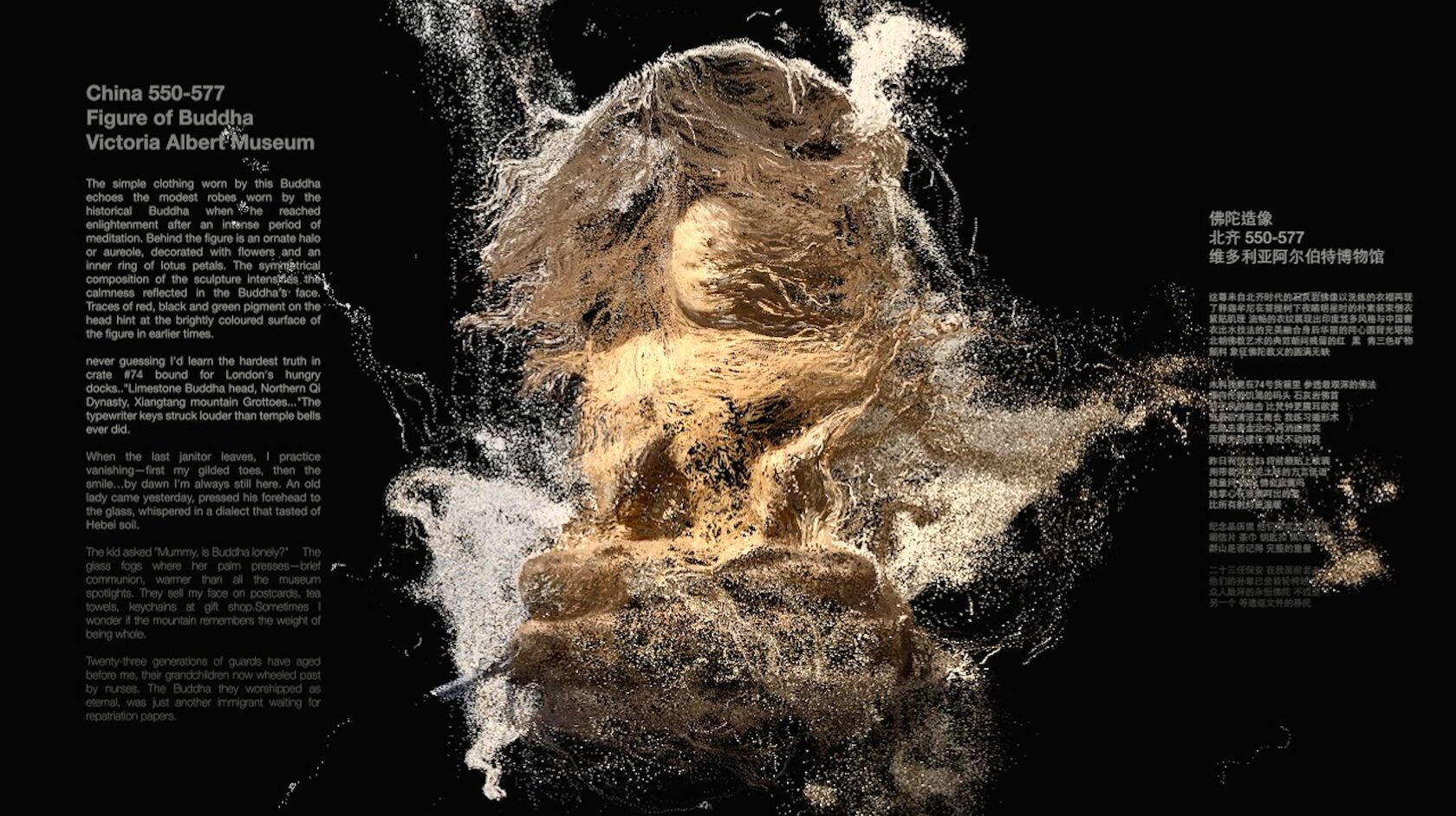
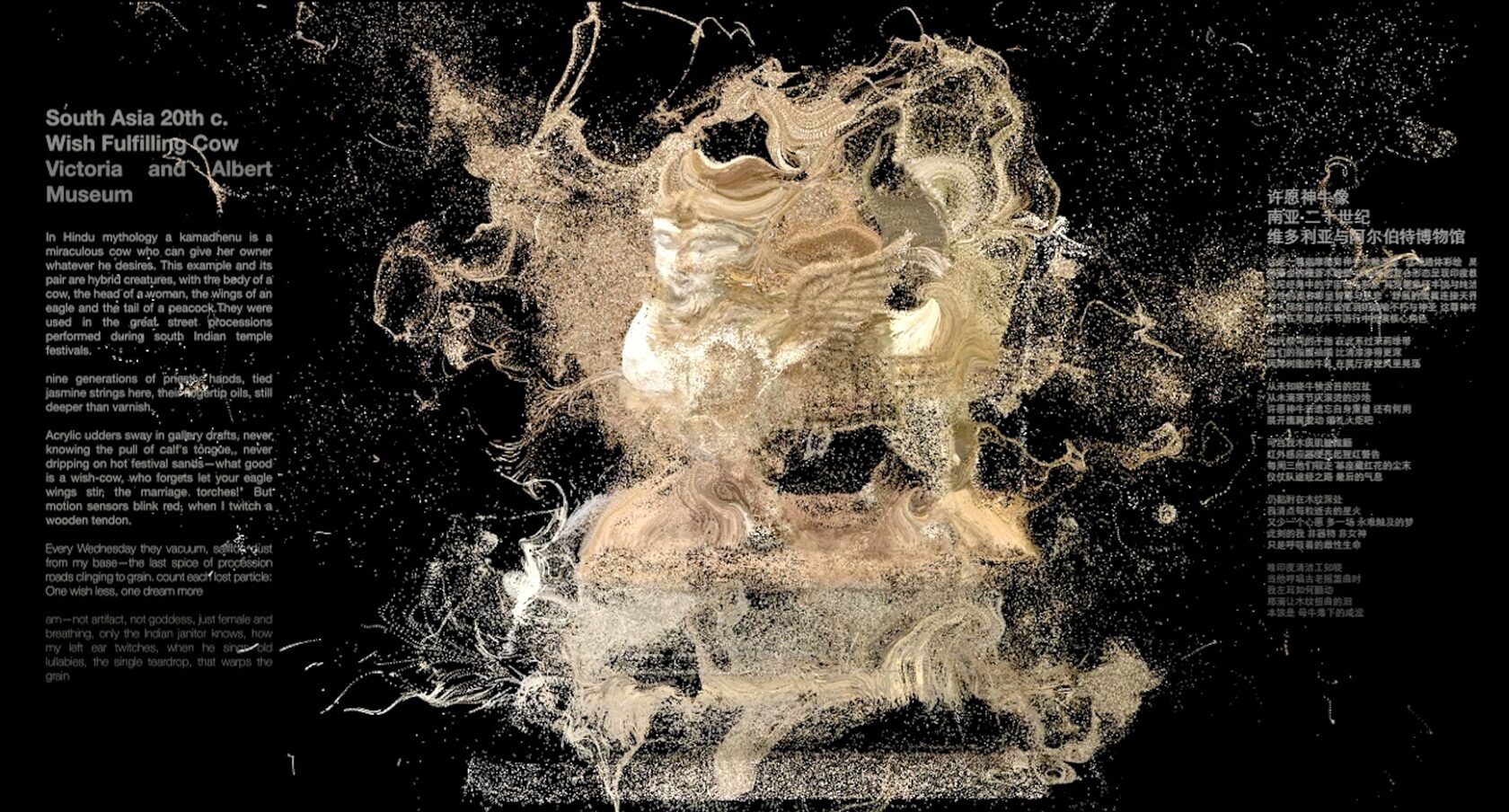
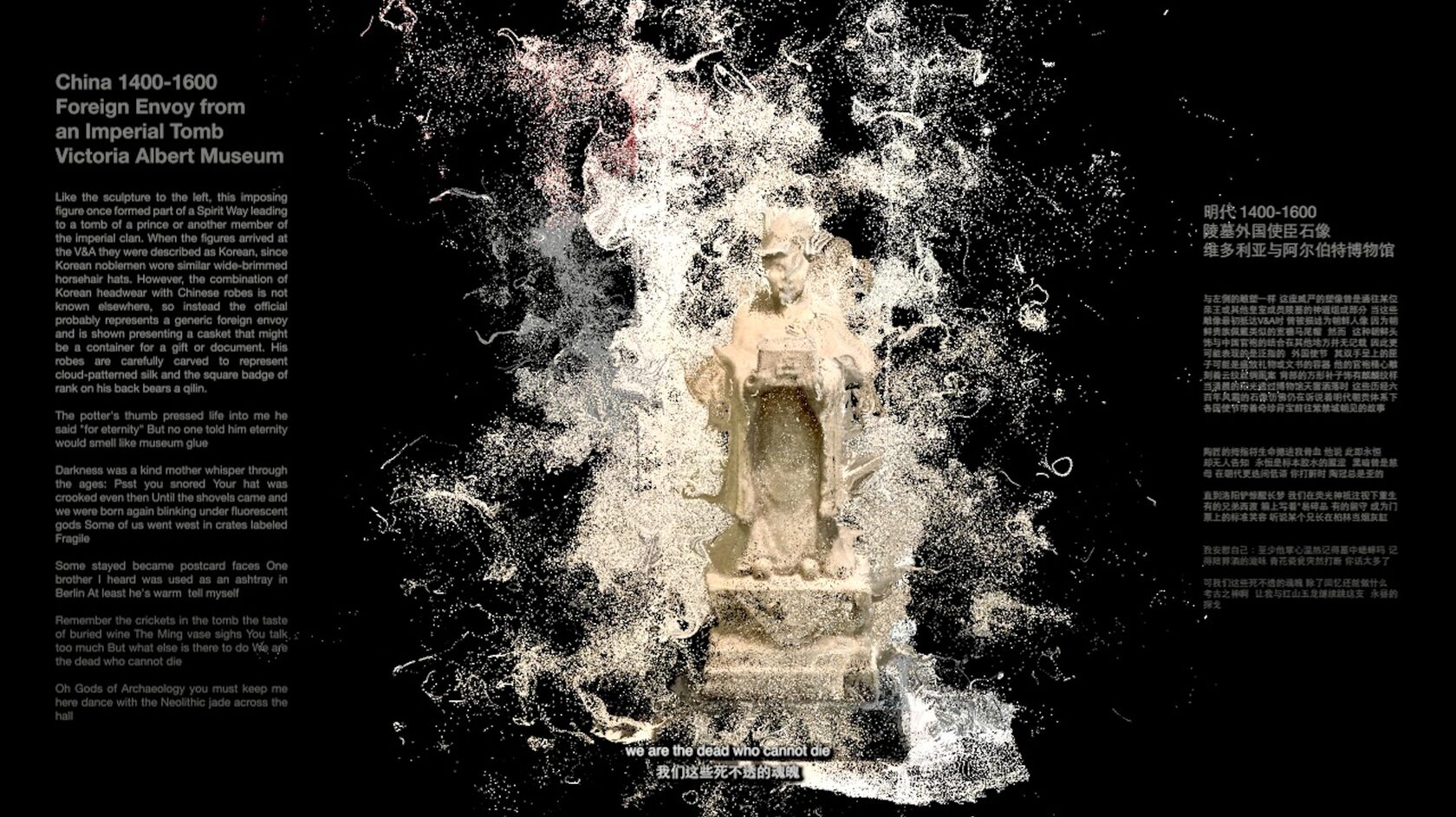
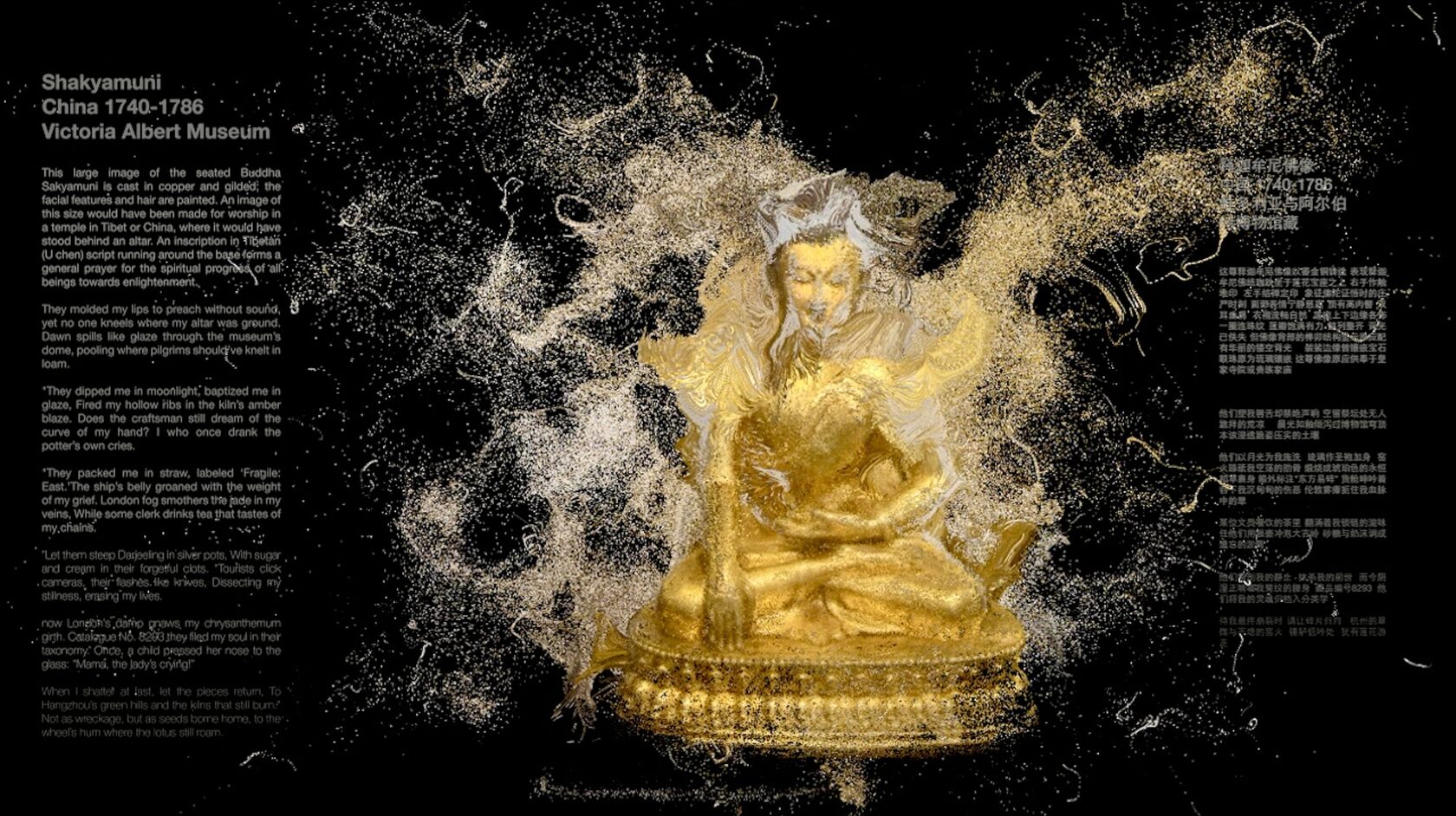
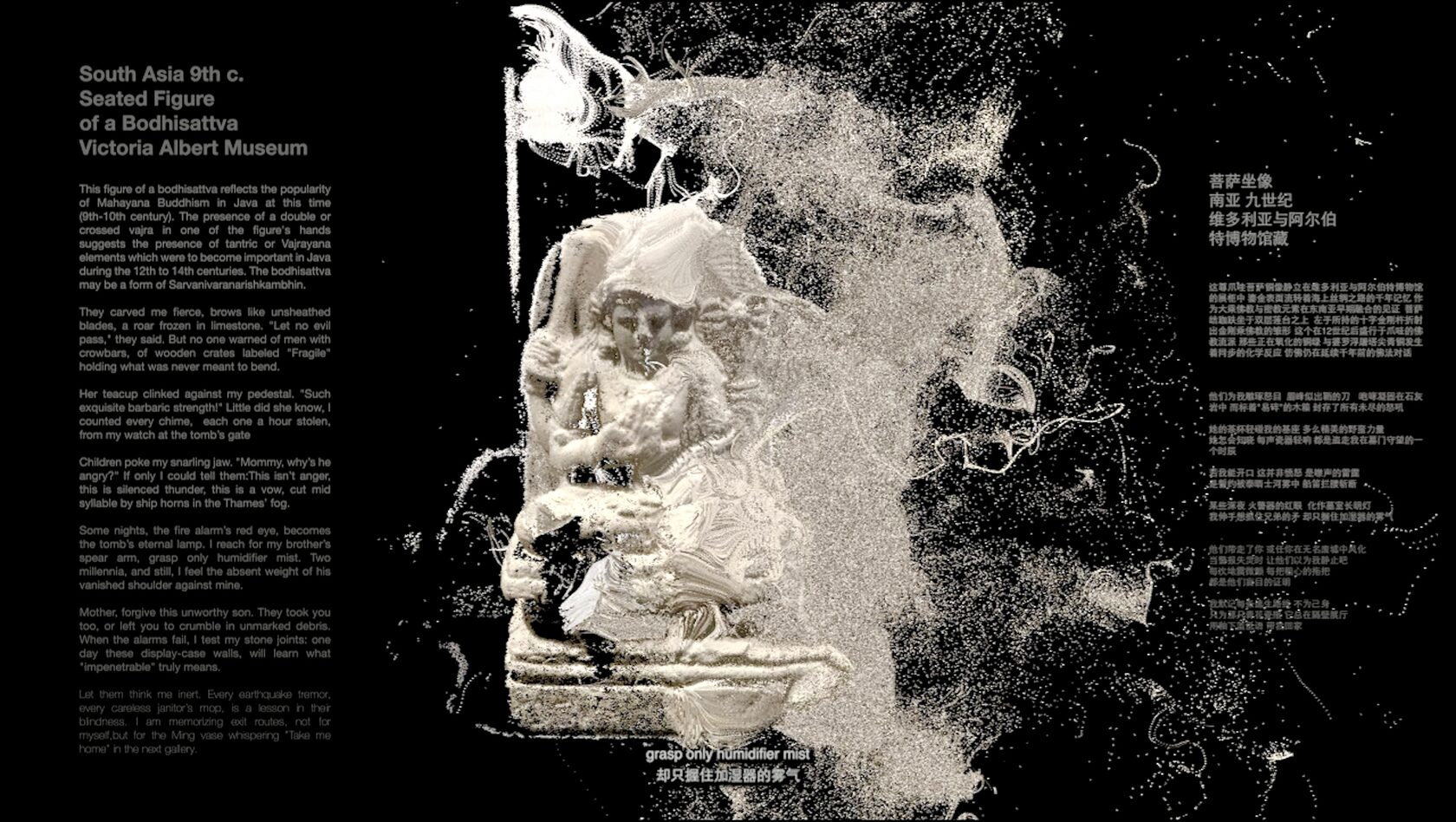
This research explores the transformative potential of AI-based digital storytelling as a medium to bridge the emotional and cultural disconnect between cultural heritage artifacts and audiences. By leveraging immersive narratives, AI generated content, and emotionally resonant storytelling techniques, this research aims to reanimate the voices of artifacts—such as looted relics, displaced sculptures, and forgotten treasures—transforming them from static museum exhibits into dynamic storytellers. Through their stories, these artifacts express their histories, struggles, and longing for their origins, fostering a profound sense of empathy and connection among viewers.
A key innovation of this project lies in the creative integration of Artificial Intelligence technologies. The voice narration, textual scripts, and soundscapes—including background music and ambient audio—are all generated or co-composed with AI tools. By using AI-generated voices, the project gives form to the imagined inner monologues of ancient artifacts, creating an uncanny, poetic resonance between the digital and the historical. AI, in this context, becomes more than a tool—it becomes a symbolic counterpart to cultural heritage artifacts themselves. Both are perceived as lifeless, artificial, and object-like, yet both can be brought to life through the illusion of voice, expression, and soul.
The research emphasizes the emotional power of storytelling—amplified by AI’s generative capacities—to raise public awareness about the consequences of tomb raiding, illegal trafficking, and the neglect of cultural heritage. By humanizing artifacts and highlighting their plights, the narratives aim to inspire a deeper sense of responsibility and urgency in preserving and protecting these irreplaceable cultural treasures. Ultimately, this research advocates for a shift from disconnection to reconnection, where AI-powered digital storytelling serves not only as a creative tool, but as a catalyst for cultural empathy, justice, and preservation.

Suwen Wang is a London-based artist and design researcher working at the intersection of artificial intelligence, digital storytelling, and cultural heritage. He holds an MA in Digital Media Arts and a Master of Research in Communication Research from the Royal College of Art. His practice explores how immersive narrative systems and generative technologies can reconnect displaced cultural artifacts with fragmented histories, emotional memory, and geographic absence.
His work critically investigates the “heritage empathy gap” the emotional and psychological distance between contemporary audiences and cultural objects removed from their original contexts through looting, displacement, or archival separation. Through AI-generated voice, text, sound, and immersive spatial media, his practice transforms silenced artifacts into synthetic narrators that exist between historical memory and machine-generated subjectivity. The work challenges static museological representation and proposes alternative forms of digital restitution, speculative remembrance, and posthuman storytelling.
Rather than treating AI as a neutral production tool, he approaches it as a co-author capable of mediating memory, absence, identity, and loss. His installations combine generative systems with curatorial and cinematic sensibilities to create emotionally charged experiences that examine cultural displacement, illicit trafficking, colonial extraction, and the politics of representation. By blending algorithmic processes with affective storytelling, the work explores how machine-generated narratives can reshape public relationships with cultural heritage.
As a researcher, he investigates how design and emerging technologies can restore narrative agency to marginalized objects, forgotten histories, and displaced cultural memory. His broader research advocates for culturally situated and ethically grounded approaches to AI-driven storytelling, positioning digital media not only as a technological interface, but as a speculative space for empathy, reconstruction, and cultural reconnection.