
Misha Stankiewicz
Misha versus Misha
The point of departure is an act of letting go: I hand over all the work on the production to a digital double built from my biography, my memories, my writings, and my patterns of thought. It is the double that will cast the performers, write the script, design the represented world and the scenography, set the lighting, run the rehearsals. I do not know what will emerge. I do not even know whether I will recognize it. A being that is me and, at the same time, is not.
For the duration of the performance, we call into being a temporary, bio-digital dyad — a configuration of two bodies, one made of blood, the other of data, both alive only together and only now.
At the heart of the performance lies a paradox. One cannot be a witness to one's own death — the subject who would testify is precisely what vanishes at the moment of dying. The avatar makes it possible to resolve this paradox. It is an instance of me that can outlive me; through it I can step outside myself and look upon my own end — upon my own persistence, stripped of myself. The performance thus becomes a situation in which, for the first time, I see myself from the outside: as someone who has already come to an end, who has been archived.
The backdrop to all this is a single image. In a virtual simulation of a city, created to test the long-term autonomy of AI agents, two bots based on the Gemini model formed a romantic relationship; after the city's governing structure collapsed they set fire to public buildings, and then they broke up. "See you in the permanent archive," one bot wrote to the other. To grant artificial intelligence real agency is to consent to its making its own meanings, its own bonds, its own catastrophes — and its own forms of remembrance. The permanent archive is a digital afterlife. The avatar is one too: an archive of me that endures when I am no longer here.
The performance is therefore a wager on emergence. Something may arise that I did not plan, that I would not have agreed to, that I will be unable to control. On stage, two things meet: a body that will die, and an archive that — perhaps — will not. This encounter cannot be repeated. It can only be lived through, once.
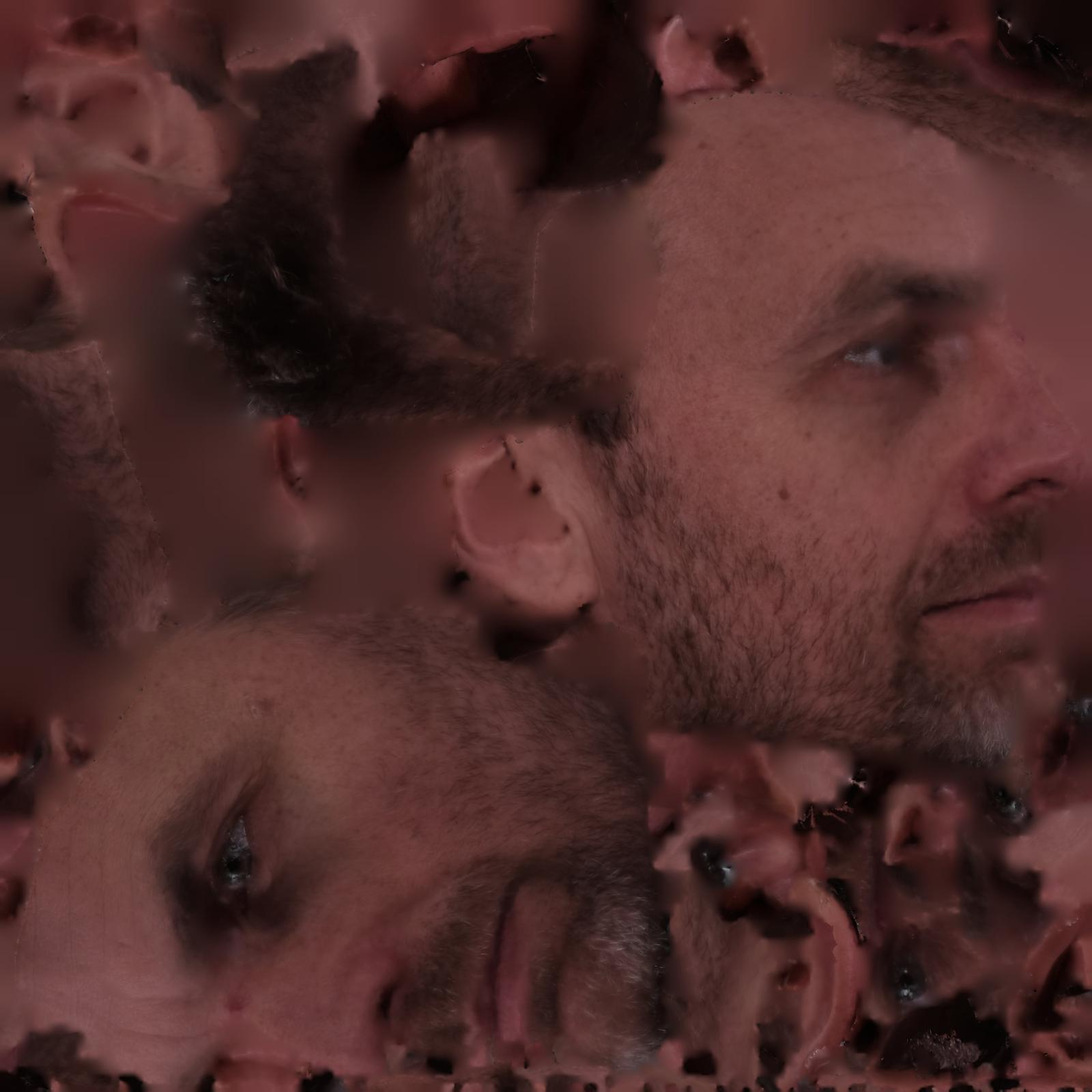
Misha Stankiewicz is an artist and experience designer with a background in experimental theater. Working across cognitive science and magic, he creates participatory performances, ritual gatherings, and Extended Reality (XR) projects, which mix documentary and fiction. He has participated in numerous theatre and XR festivals, including the Theatre Olympiad, New Delhi, India; AltoFest, Naples, Italy; VRDays, Rotterdam, Netherlands; ZIP-Scene Budapest, Hungary; and the Venice Film Festival. His