Daniel Berio & Liat Grayver
LABOR
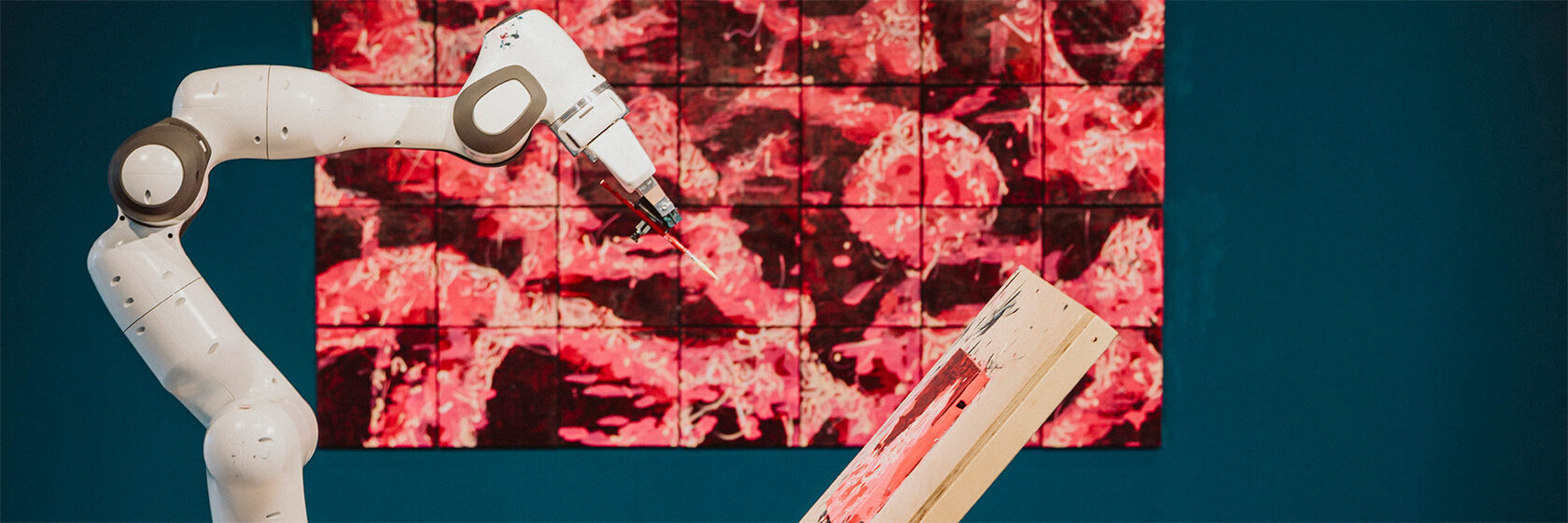
Labor is a live human/robot painting performative installation that combines generative graphics techniques, robotic automation and traditional painting methods. It explores the role of embodied intelligence in artistic production while addressing the historical marginalization of women’s bodies, work, and health with the dual meanings of labor: childbirth and manual work.
Video documentation of LABOR running at the CLB gallery in Berlin (2025)
The installation takes place over multiple days, during which the artists Daniel Berio and Liat Grayver work alongside a 7-axis robotic arm equipped with custom paintbrushes, in order to produce a large-scale painting. The setting is one reminiscent of an artist’s atelier, but combining traditional painterly mediums with robotic automation.
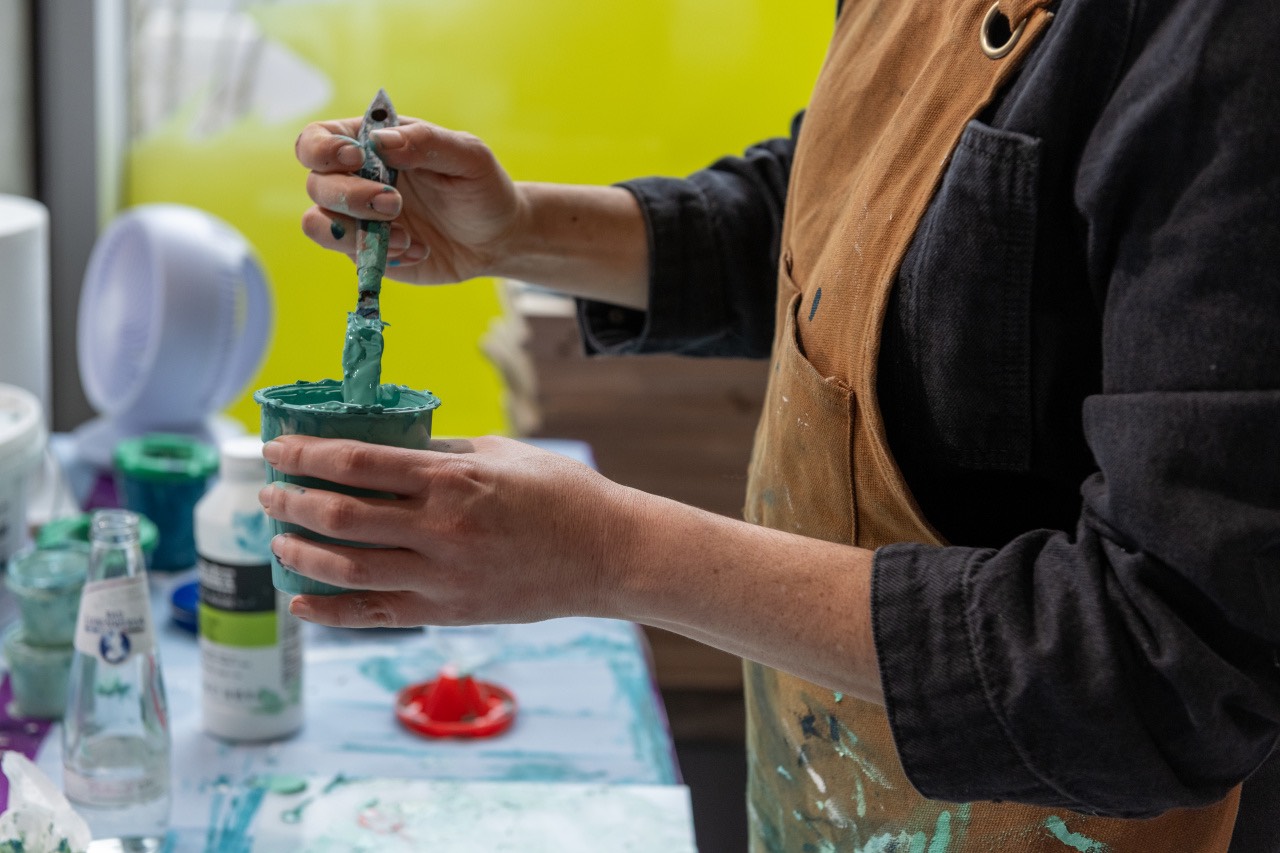
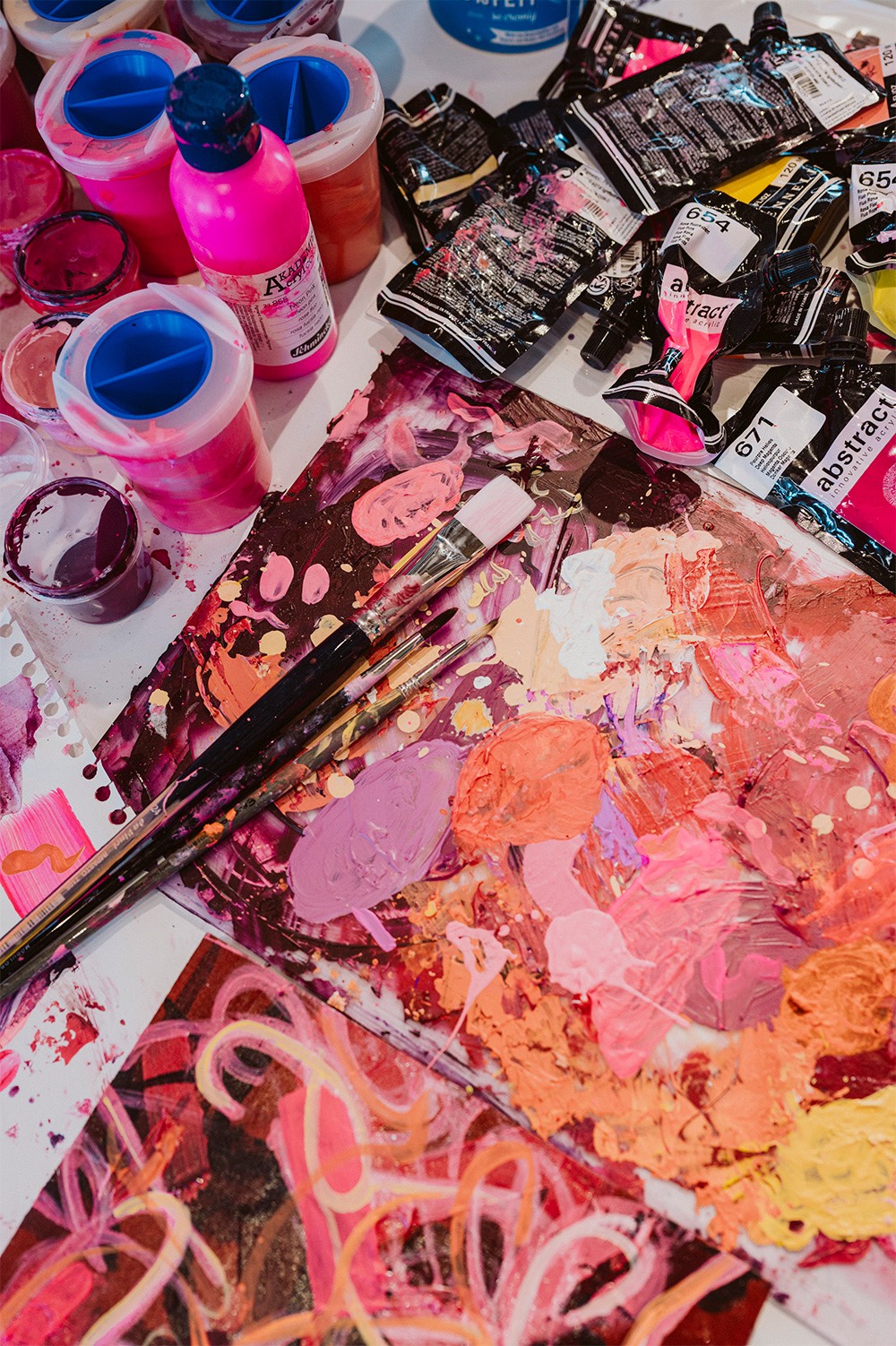
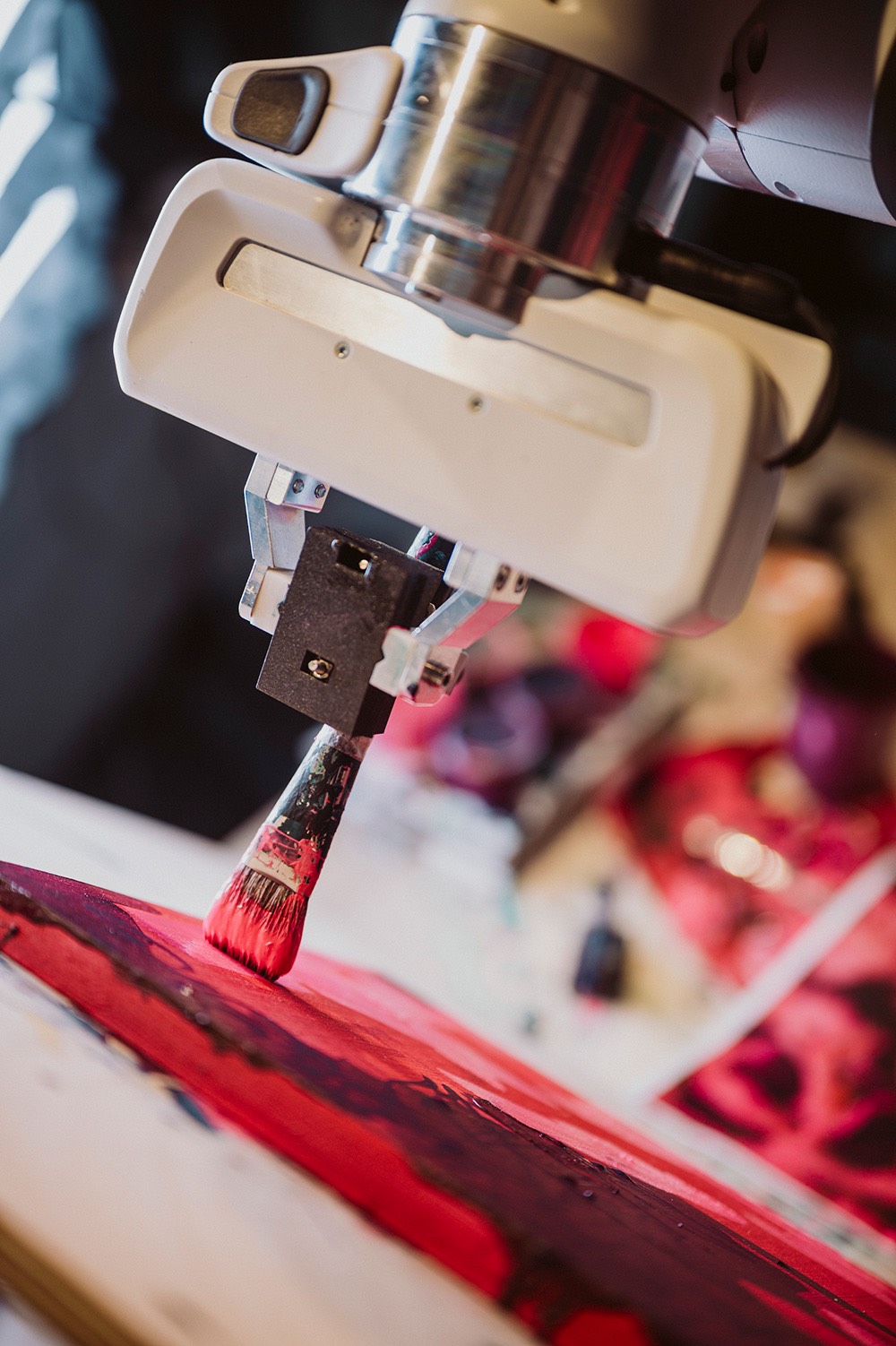
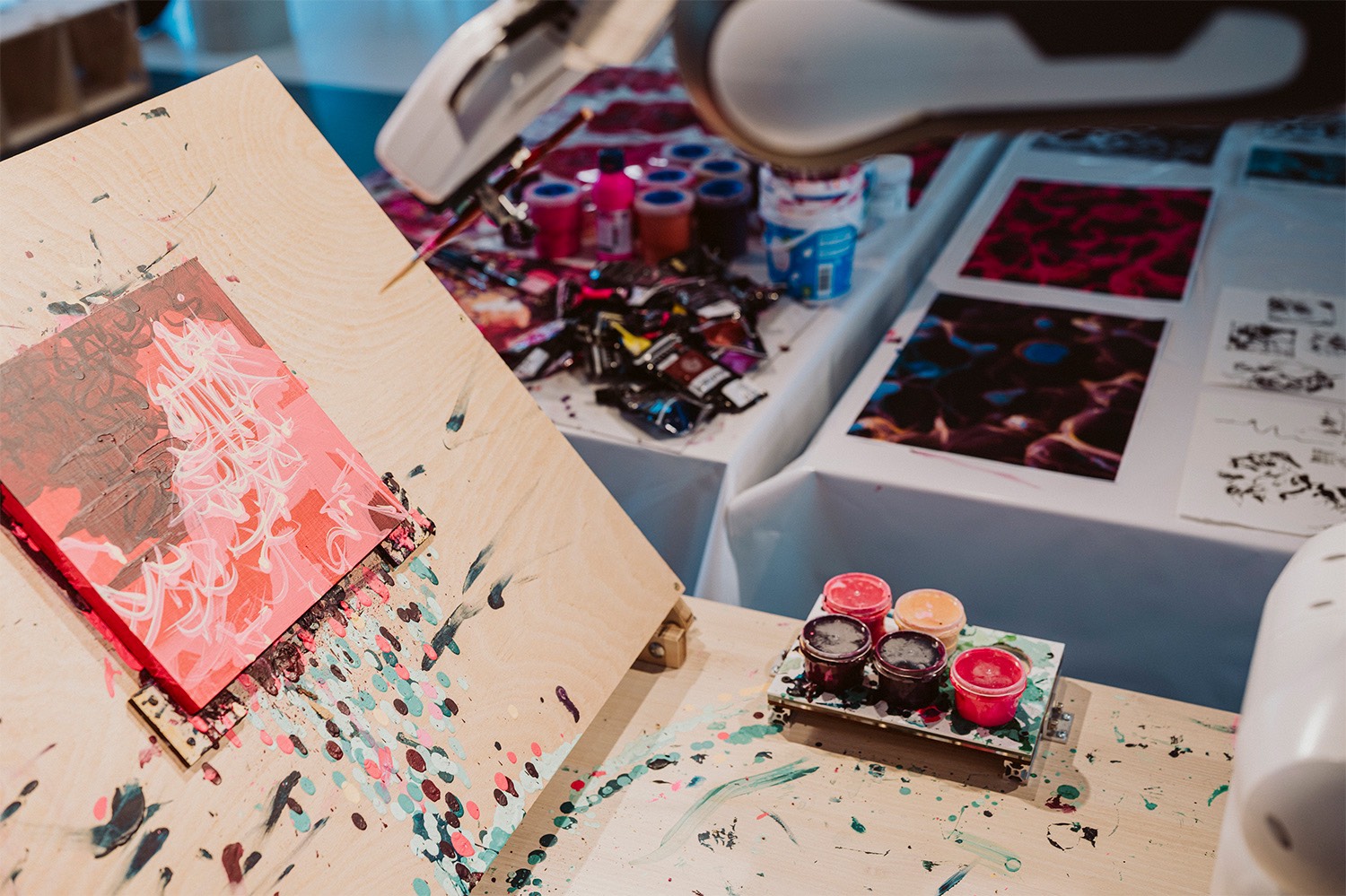

The painting consists of multiple individually painted tiles, which are assembled on a wall as the work progresses. Together, the tiles form an abstraction of an electron microscope image of human placenta cells, provided by Prof. Inge Hermann and ETH Zurich’s Nanoparticle Systems Engineering Lab.
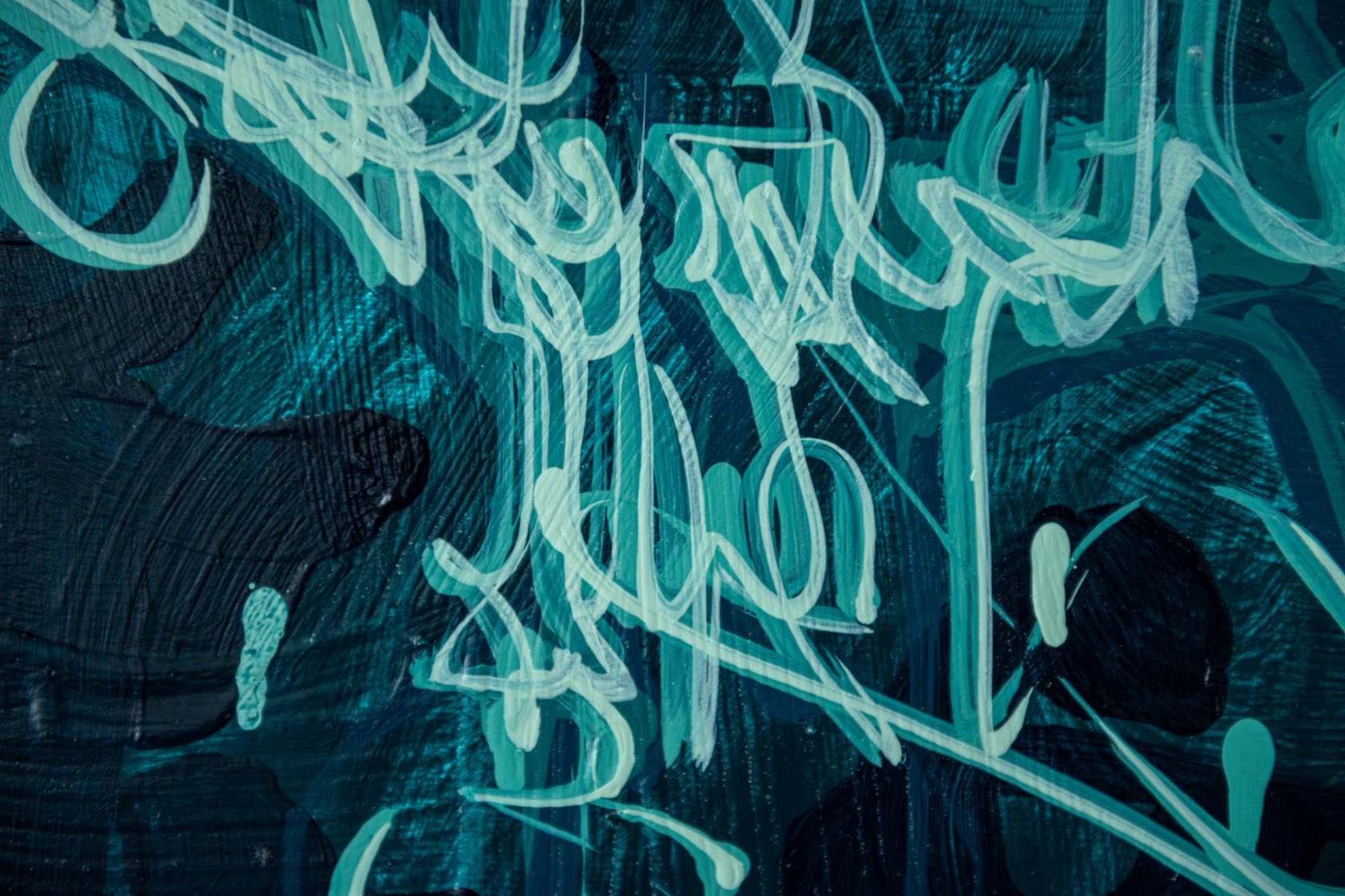
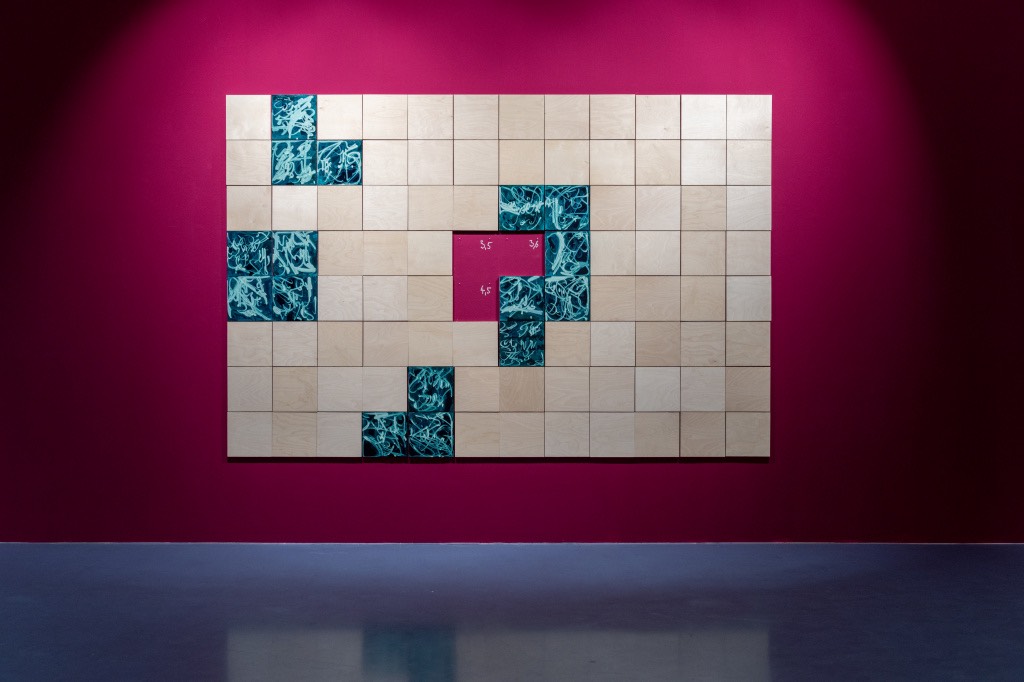

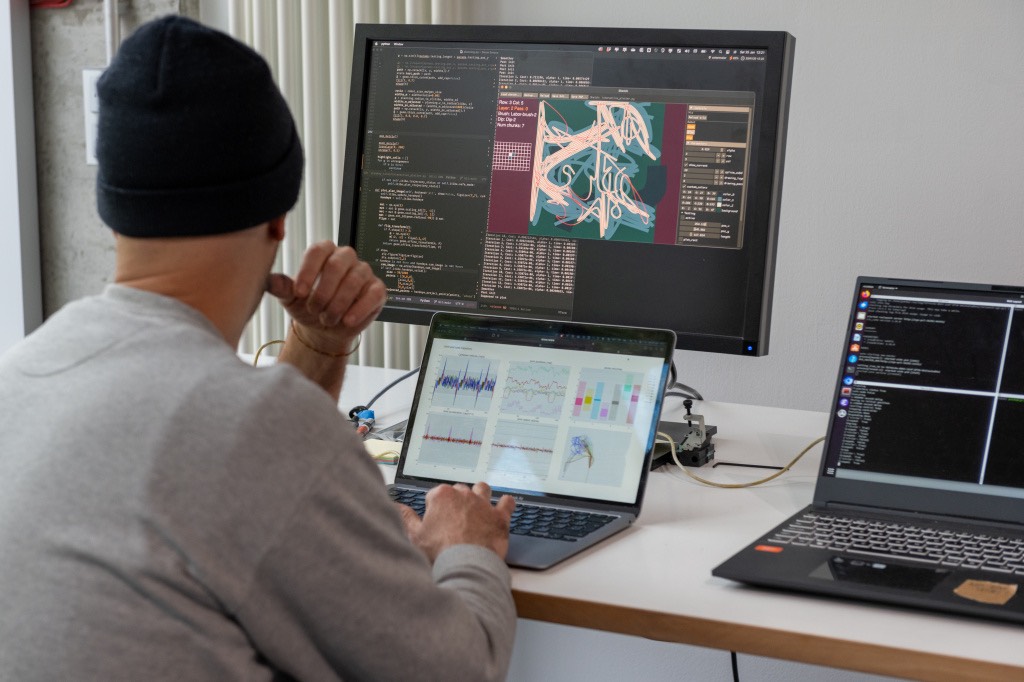
The tiles are generated using a system that enables the abstraction of target images with smooth trajectories that can be executed by the robot, while adapting to example style images provided by the artists. The system uses CLIP together with a differentiable rasterizer to jointly optimize curve control points and a variable stroke thickness. The trajectories are represented as smoothing B-splines that minimize changes in acceleration, a.k.a. "jerk". The underlying technology has been presented at SIGGRAPH Asia 2025 and both the paper and code are available here.

Optimization steps for one tile.
Daniel Berio is an artist and researcher working between computer graphics, robotics, creative coding, and graffiti art. He currently works as a lecturer in the Department of Computing at Goldsmiths, University of London. He completed his PhD in Computing at Goldsmiths, where he researched methods for the computer-aided design and procedural generation of (synthetic) graffiti art and calligraphy. Since 2012, he has been focusing on materializing computer-generated designs using drawing machines, ranging from vintage pen plotters to custom-built drawing machines and articulated robotic arms. Previously, Daniel specialized in multimedia and graphics software development, especially applications involving real-time, hardware-accelerated rendering and vector-graphics techniques. Artistically, he comes from a graffiti writing background and explores this same aesthetic in algorithmically generated forms.
Liat Grayver is a Berlin-based cross-disciplinary painter and media artist redefining painting, one of art’s most foundational forms, within our technology-driven era. Since 2016, she has working on methods on how to integrate robotic and computational languages into physical painting and creative image-making processes. As an academic researcher and co-founder of the multidisciplinary project EACVA (2023–26), she has been collaborating with philosophers, psychologists, and robotics engineers to investigate how artificial systems challenge traditional notions of creativity, authorship, and agency. Grayver’s practice bridges studio work, academic publication, and international lectures. Her work is has been exhibited internationaly across museums, galleries, media art festivals, and academic conferences.